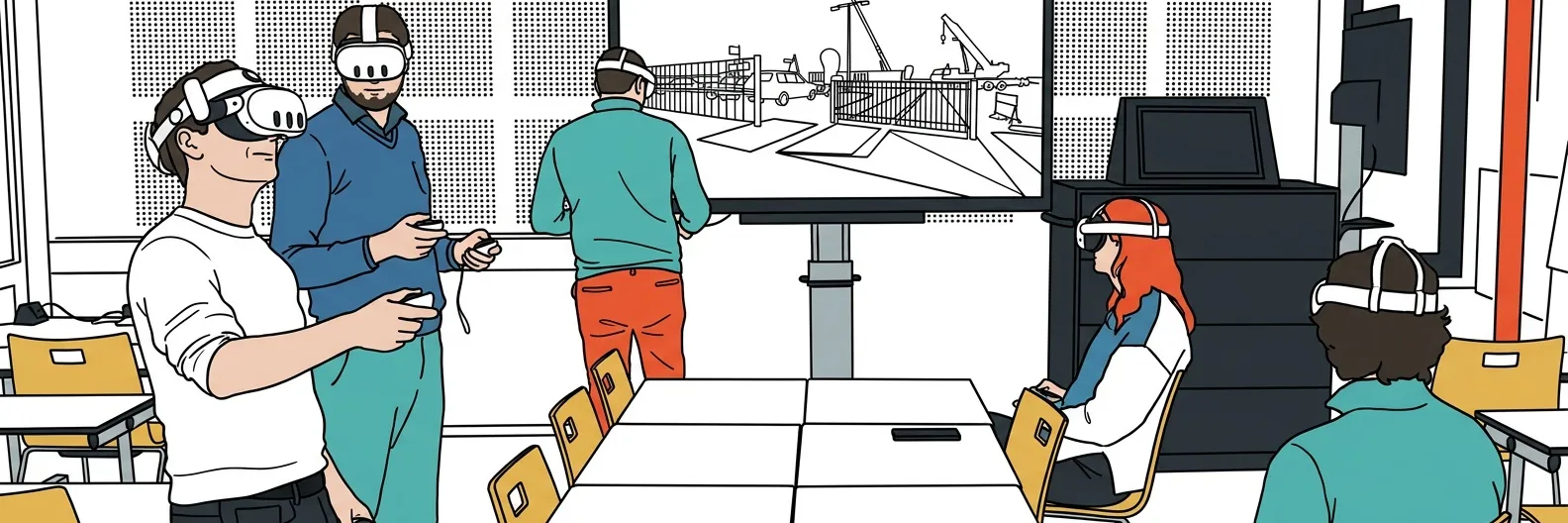
Avans University Uses Arkio to Bring Student Designs to Life in XR
 Johan Hanegraaf June 23, 2026
 See how Avans University of Applied Sciences uses Arkio to help built-environment students understand scale, daylight, site context, and collaboration by stepping inside their own designs.
About Avans University of Applied Sciences
At the Academy for the Built Environment at Avans University of Applied Sciences, students in Architecture, Spatial Development, Civil Engineering, and Construction Management learn to design the spaces, neighborhoods, infrastructure, and buildings people will eventually use.
That work produces thousands of student models each year, from first-year design studies to more advanced BIM projects. Yet even when a model is carefully made in 3D software, there is still a gap between seeing it on a laptop and understanding what it would feel like as a real place.
For Nick van Breda, ICT and educational coach at Avans, that gap is exactly where XR can help. He sees XR as a way to move spatial understanding out of drawings and into something students can physically experience.
Arkio gives Avans a way to turn student models into shared spatial experiences. Nick describes it as a virtual scale model that students and teachers can stand around together, and then step inside at full human scale.
From Screen-Based Models to Lived Space
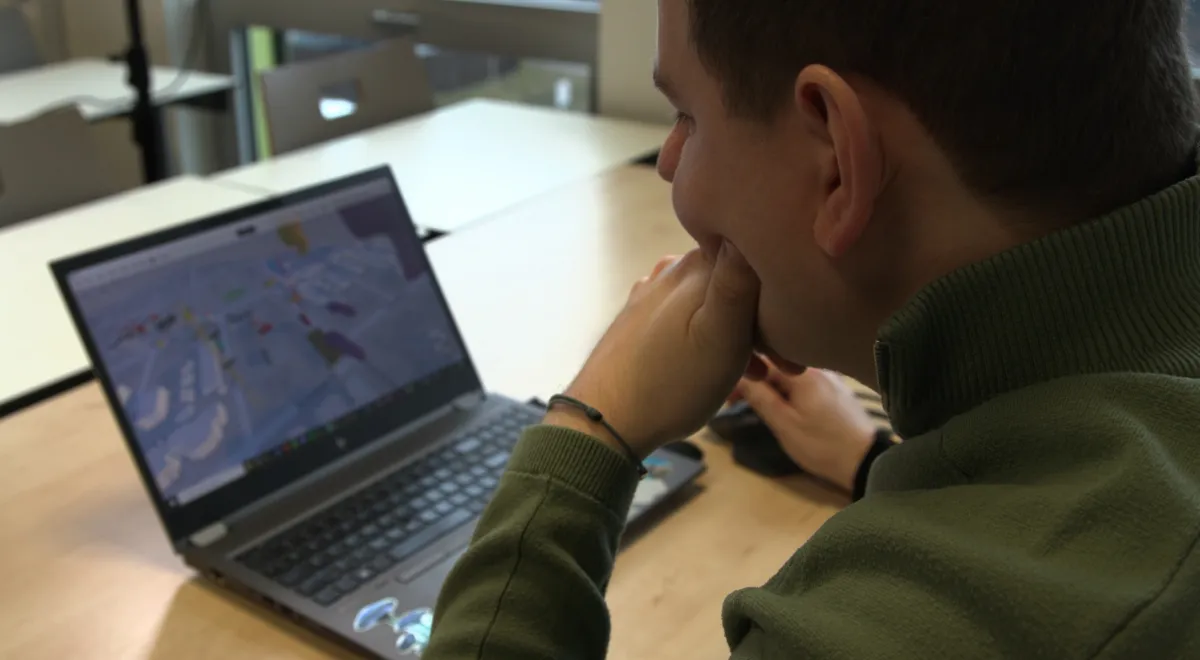
Students already use tools like Revit, SketchUp, and Archicad to develop their designs. Arkio does not replace that work. Instead, it adds an experiential step after the model has been created, allowing students to review what they have made as a place rather than only as geometry on a screen.
Inside Arkio, students can stand in their own designs and understand scale, sightlines, and spatial relationships in a way that is difficult to achieve from a flat drawing or screen-based model alone.
That change is especially valuable early in architectural education. First-year students may understand plans and diagrams in theory, but the relationship between a drawing, a model, and a human body takes time to develop. In XR, those lessons become immediate. A stair that looks acceptable in a drawing may suddenly feel wrong. A wall thickness, window position, or entrance route can be experienced directly instead of imagined.
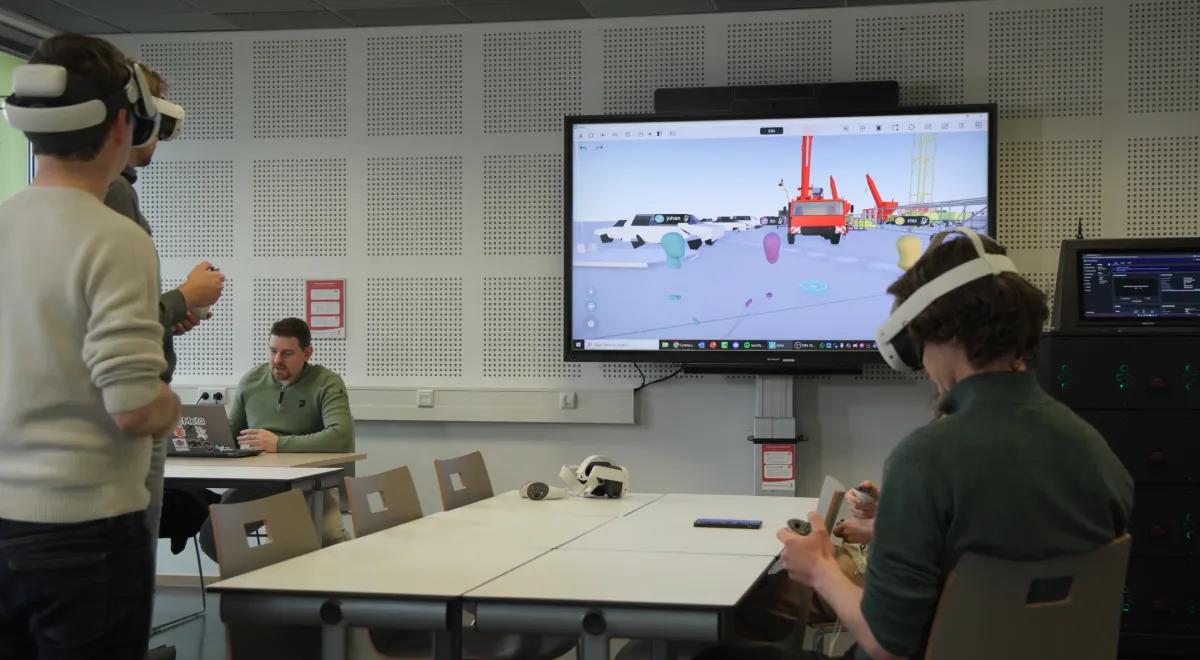
At Avans, a typical rhythm can move from drawing and modelling into immersive review within the same class session. Students create a design, bring it into Arkio, and then gather around or inside the same project to discuss what is working and what needs another pass.
Testing Site Choices at Scale
One of the first-year assignments asks students to choose a location for their design within a project area. They begin with a site visit, then develop floor plans, diagrams, and design proposals. The question is not only whether the building works as an object, but whether it works in that specific place.
By uploading student models into Arkio, Avans lets students place their own work in the right location and present their site decisions to each other. Instead of defending a choice only through a drawing or a verbal explanation, they can show the relationship between the building, its surroundings, views, routes, and scale.
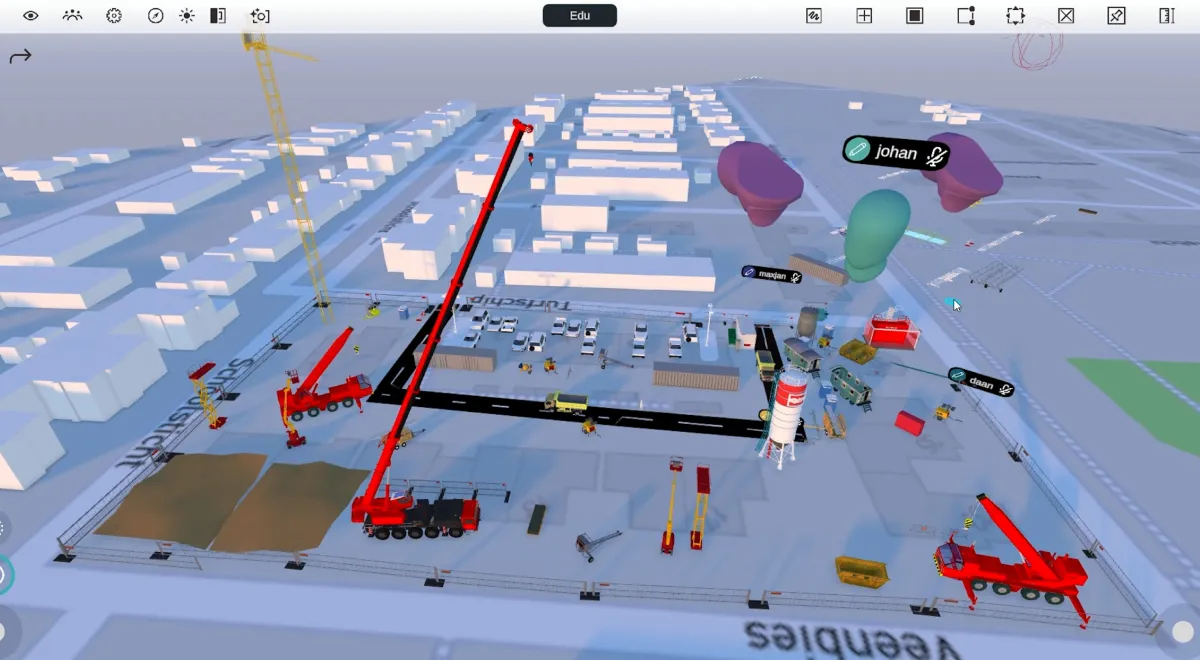
This makes the critique more concrete. Students can stand at virtual viewpoints, look back toward the building, and understand whether the massing, orientation, and public presence support the intent of the design.
Making Daylight and Sunlight Understandable
In the first year, Avans places strong emphasis on sunlight and daylight. Students study how buildings respond to solar orientation, how openings affect interior quality, and how natural light can be used intelligently in a design.
Traditionally, those lessons rely on calculations, diagrams, and software-based daylight studies. Those tools remain important, but XR helps students connect analysis to experience.
"Daylight studies work incredibly well here," Nick says. "How windows are positioned, how sunlight enters, when a space feels comfortable... you can hardly explain that without standing inside it yourself."
In Arkio, students can enter their own designs and ask a more direct set of questions: What does the sunlight look like? How does the daylight feel inside this room? Does the space become comfortable, too dark, too exposed, or unexpectedly strong at a certain time of day?
That kind of embodied review helps students treat light as a design material, not only as a technical requirement.
A More Natural Way to Collaborate
The collaborative side of Arkio has become central to how Avans uses XR. Students are not only viewing their models. They can gather inside a shared environment, point things out, duplicate or move objects, and see changes together in real time.
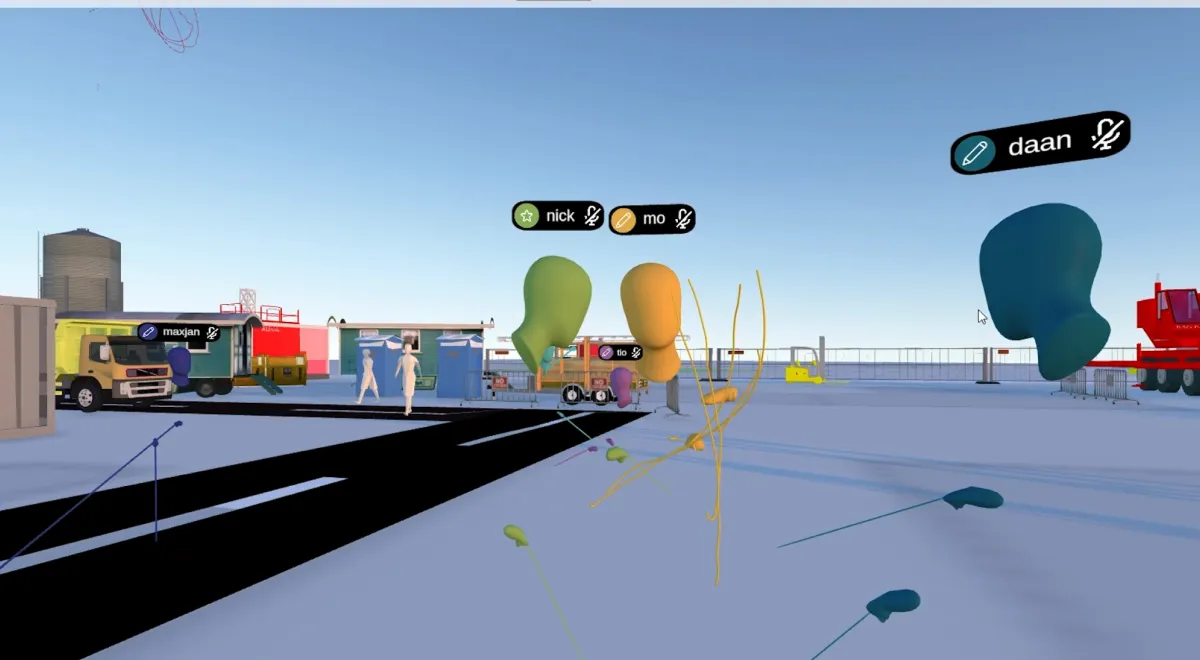
Inside the shared XR environment, collaboration becomes visible. Students can walk around together, see where others are positioned, and understand changes as they happen in the model.
That shared presence changes the energy of a review. Designs that were previously isolated on individual laptops can be placed next to each other like models on a studio table. Students can compare ideas, discuss routes and sightlines, and learn from the spatial consequences of each other's decisions.
The result is less like a presentation from one student to the rest of the room, and more like a collective design conversation. The model becomes the meeting place.
Beyond the Classroom
Avans has also seen how immersive models can help outside the normal studio setting.
During a study trip connected to urban and water-management challenges in Kumasi, Ghana, Arkio was explored as a way to make spatial ideas easier to understand across distance and context. The work also revealed a practical lesson: VR depends on the ecosystem around it. Reliable Wi-Fi, access to headsets, data costs, and local infrastructure all affect whether immersive collaboration can run smoothly.
Even when the setup was difficult, the underlying value remained clear. VR can become a shared spatial language, but only when the technical foundation is strong enough to support the group.
Closer to home, one student used Arkio during an internship project for a new public square in Maastricht. At a residents' meeting, the headset made the design easier to understand for people who were not used to reading plans or technical drawings.
"Residents often cannot read what we see in 2D," Nick explains. "But as soon as they walk through the design, they understand it instantly."
That moment shows why XR matters beyond education. It can help designers communicate with the people who will eventually live with the decisions being made.
Easy Enough to Start Using
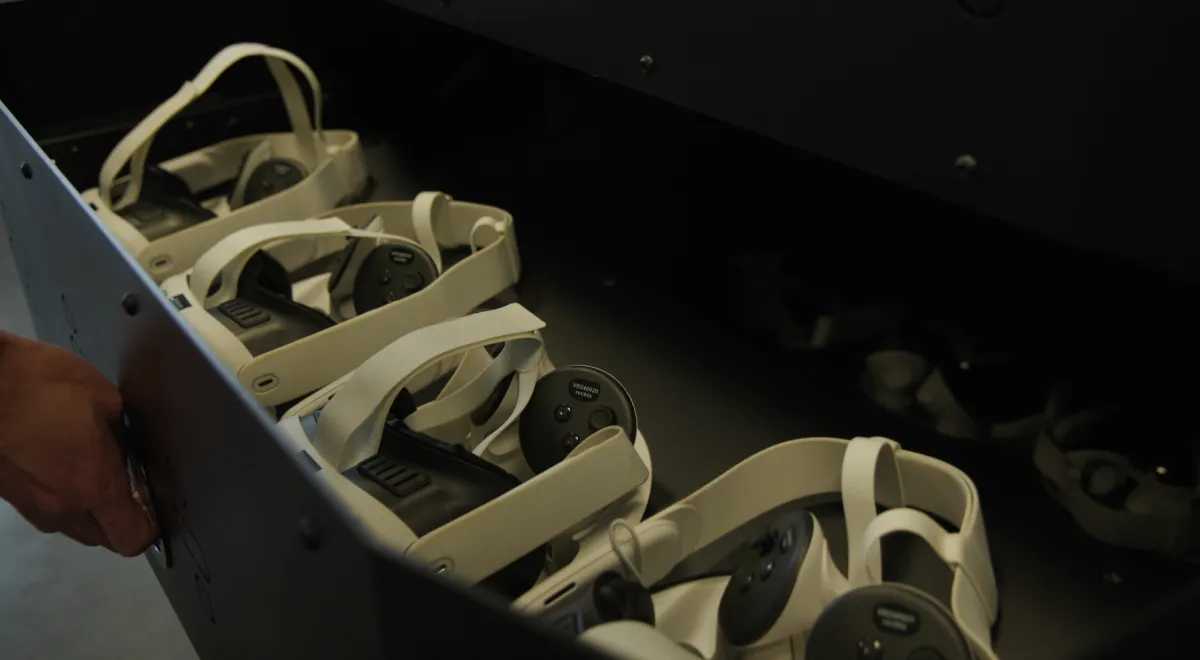
For teachers, one of the most important changes is that the hardware and software setup has become easier to use. Wireless headsets reduce the setup burden, and Avans has devices available that can be taken from a cabinet and used directly in class.
"The software is free for education, runs on all systems, and we only had to install it once," Nick says. "It's been running smoothly for two and a half years now."
That accessibility is important because XR only becomes part of education when teachers can realistically adopt it. Nick's advice to colleagues is simple: start experimenting. Once teachers and students begin using the technology, new ideas for assignments, critique formats, and curriculum integration emerge naturally.
Learning by Presence
When students remove the headset after a review, the model on their laptop often looks different. It is the same design, but they have now experienced it as a place. They have understood its scale, walked through its spaces, noticed its light, and seen how others respond to it.
That is the educational shift Avans is exploring with Arkio: from observing a design to inhabiting it.
For Nick, the value is not that XR makes education more spectacular. It is that it gives students a more direct way to understand the consequences of their own design decisions.

Nick van Breda, ICT and Educational Coach at Avans University of Applied Sciences
"Spatial insight does not come from a sheet of paper. You have to be able to walk through it."